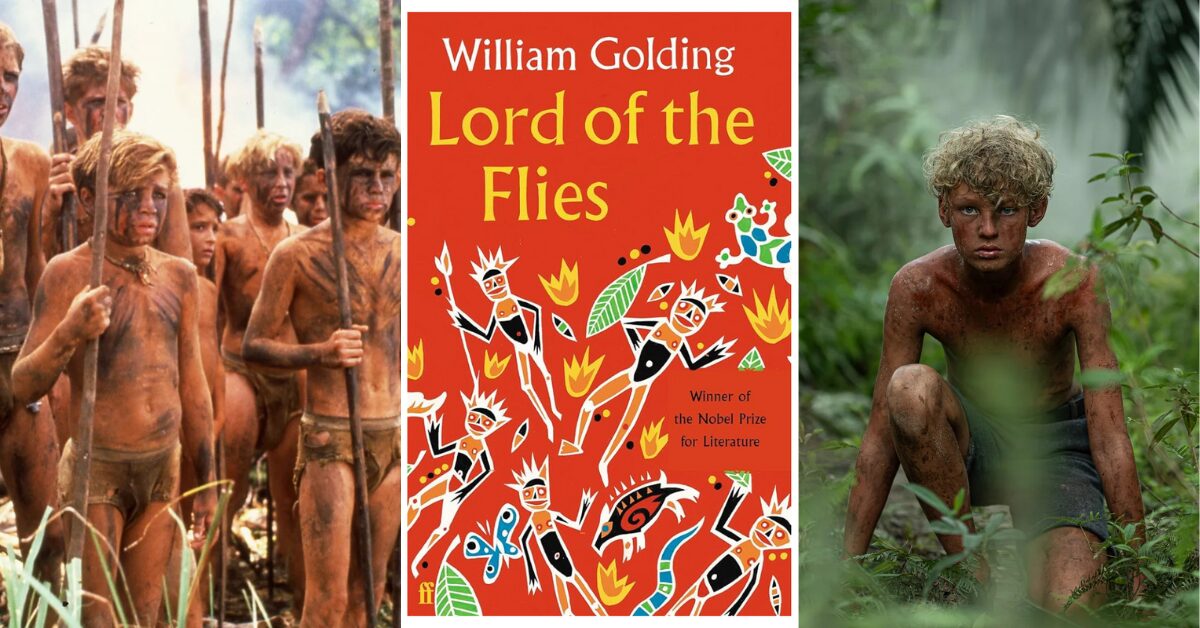
William Golding’s Lord of the Flies is a literary classic that delves into the darkest aspects of human nature. Through the experiences of a group of boys stranded on an isolated island, the novel explores how societal structures collapse, revealing the savage instincts that lie within all humans. Among the boys, Simon stands out as one of the most symbolic and meaningful characters. Pure, intuitive, and spiritually insightful, he embodies the moral heart of the novel.
But what does Simon truly represent in Lord of the Flies? This analysis explores Simon’s symbolism, his Christ-like qualities, his connection to nature, and why his death marks one of the most important turning points in the story.
Who Is Simon in Lord of the Flies?
Simon is introduced as a quiet, thoughtful boy who prefers peace and solitude over power or leadership. Unlike Ralph, who represents order, or Jack, who represents savagery, Simon symbolizes inner goodness and moral truth.
He is kind to the littluns, protects Piggy from cruelty, and seeks harmony rather than conflict. His sensitivity and spiritual awareness set him apart from the others, making him the novel’s moral compass.
Simon’s Background and Personal Traits in the Novel
Simon’s background is sparse in the novel. He does not have the strong leadership qualities of Ralph or the physical prowess of Jack. Instead, he is a quiet and humble boy with an innate sensitivity. His isolation is not due to any lack of desire for companionship but rather his natural inclination towards solitude and contemplation.
Simon’s solitude allows him to see things the other boys cannot. He is perceptive in a way that the others are not. While Ralph and Jack struggle to survive, Simon’s focus on the natural world and spiritual well-being gives him a unique insight into the deeper truths of the island. This quality allows him to understand the boys’ inner darkness—something the others fail to grasp.
Although Simon’s ability to see the truth isolates him, it also gives him a unique perspective on the unfolding events. He is the first character to realize that the “beast” the boys fear is not an external creature but the manifestation of their own darkness.
Simon’s Acts of Kindness and Compassion
Throughout the novel, Simon’s acts of kindness stand out in stark contrast to the violence and power struggles around him. While Jack thrives on hunting and domination, Simon is consistently selfless, helping others without seeking any recognition.
For example, Simon gives his food to the other boys without any expectation of reward. His act of kindness reflects his inner purity and sets him apart as a character who values the well-being of others above all. He also protects Piggy from the cruelty of the others, further emphasizing his moral compass. Simon’s selflessness represents the idea of goodness that exists even in the most brutal environments.
How Simon’s Good Deeds Reflect on his Character
Simon’s compassion is integral to his character. While the other boys grow increasingly savage, Simon remains a symbol of empathy and understanding. His good deeds are not driven by self-interest but by a moral sense of duty.
Simon’s character represents a moral ideal that is often rejected by the chaos surrounding him. His willingness to help others, his kindness toward animals, and his understanding of the deeper truths of the human experience reflect a purity that the island’s inhabitants have lost.
Simon’s Conversations with the “Lord of the Flies”
The most important symbolic moment in the novel comes when Simon encounters the “Lord of the Flies,” the severed pig’s head on a stick. In this chilling scene, Simon has a vision where the pig’s head speaks to him, revealing the true nature of the “beast” that the boys fear. Simon learns that the “beast” is not an external monster but an internal manifestation of the darkness within each of them.
This moment is pivotal because Simon becomes the first character to grasp the truth about the island’s true horrors. The “beast” is not a creature they can kill—it is their own fears and primal instincts. Simon’s tragic fate lies in his inability to communicate this truth to the others before he is killed. His encounter with the “Lord of the Flies” serves as the novel’s central moment of revelation and demonstrates Simon’s unique ability to perceive the underlying darkness of human nature.
What Does Simon Symbolize in Lord of the Flies?
Simon is not just a character; he is a powerful symbol in Lord of the Flies. He represents goodness, purity, truth, and spirituality in a world overtaken by violence and savagery. His role in the story is essential to Golding’s larger commentary on the human condition.
1. Innocence and Innate Goodness
Simon represents the purity that still exists within humanity. He sees beauty in the island, treats others with compassion, and refuses to embrace violence. As the boys become increasingly savage, Simon remains a reminder of what humanity can be when guided by empathy rather than fear.
His tragic death signifies the destruction of that innocence.
2. Christ-like Imagery and Sacrifice
Many literary critics have drawn parallels between Simon’s character and that of Christ. His selflessness, purity, and willingness to sacrifice himself for the greater good place him in direct alignment with Christ-like symbolism. In the novel, Simon is the only one who truly understands the nature of the “beast,” and his attempt to reveal the truth results in his tragic death.
Simon’s death mirrors Christ’s crucifixion in several ways. He dies for a truth that no one else understands or accepts, and his sacrifice is made in vain. His death is symbolic of the loss of innocence and the ultimate rejection of goodness in favor of savagery.
3. Instances of Simon’s Christ-like Symbolism in the Novel
Several key moments in Lord of the Flies reinforce Simon’s Christ-like symbolism. His solitary nature, his self-sacrifice, and his ultimate death all parallel aspects of Christ’s life and teachings. The most obvious instance of this symbolism is Simon’s death, which occurs during a chaotic and frenzied moment when the boys mistake him for the beast and kill him. This tragic act mirrors the crucifixion, as Simon’s message is misunderstood, and his sacrifice is rejected.
4. A Spiritual Connection to Nature
One of the most distinctive features of Simon’s character is his deep connection with nature. Unlike the other boys, who are caught up in the material concerns of survival, Simon finds peace and solace in the natural world. His ability to appreciate the beauty and tranquility of the island sets him apart as a spiritual figure, deeply in tune with the rhythms of the earth.
Simon’s relationship with nature plays a crucial role in the development of the novel’s themes. His peaceful interactions with the island stand in stark contrast to the increasing violence and disorder surrounding him. While the boys grow increasingly savage, Simon remains connected to the world around him, offering a symbol of harmony and understanding.
Simon’s encounters with nature emphasize the novel’s central themes of civilization versus savagery. Simon is the only character who finds peace in the wilderness, while the others are consumed by their fears and primal urges. His ability to live in harmony with nature highlights the importance of balance and understanding in a world otherwise consumed by fear.
Simon’s Key Moments and Why They Matter
1. Simon’s Encounter with the Beast: A Turning Point
Simon’s moment of revelation about the beast is one of the most important turning points in the novel. When Simon encounters the “Lord of the Flies,” he understands that the beast is not an external monster, but the evil that resides within each person. This realization changes the direction of the story, as Simon becomes the sole character who truly understands the nature of the terror the boys are experiencing.
This discovery of the beast’s true nature is a reflection of Simon’s moral clarity. However, it also marks the beginning of his tragic fate. His attempt to communicate the truth to the boys is met with violence, and his death signifies the ultimate rejection of goodness and truth.
2. The Tragic Climax: Simon’s Death and Its Impact
Simon’s death is the novel’s most tragic moment. After discovering the truth about the beast, Simon tries to return to the group to share his revelation. But in the frenzy of the boys’ fear, Simon is killed. This moment marks the end of innocence and the complete collapse of morality on the island. Simon’s death underscores the novel’s central theme of the fragility of civilization and the destructive nature of fear.
3. The Aftermath of Simon’s Death on the Other Characters
After Simon’s death, the boys descend even further into savagery. Ralph is horrified by what has happened, but his guilt and fear cloud his understanding. The group, now fully immersed in their primal instincts, continues down a path of violence and chaos. Simon’s death marks the complete loss of innocence, and from this moment forward, any possibility of returning to civility is gone.
Contrasting Simon with Other Characters
1. Simon vs. Ralph: Moral vs. Practical Leadership
Ralph and Simon represent different forms of leadership. Ralph’s approach is rooted in reason, order, and the practical aspects of survival. Simon, on the other hand, embodies a more spiritual and introspective leadership style, emphasizing understanding and compassion over structure and authority.
2. The Antithesis of Jack: Simon’s Peaceful Approach
While Jack thrives on power, violence, and hunting, Simon remains steadfast in his peaceful nature. His gentleness and selflessness serve as a stark contrast to Jack’s tyrannical leadership. Simon challenges Jack’s authority by refusing to give in to the primal instincts that drive the other boys, ultimately sacrificing himself for the truth.
3. Simon and Piggy: Intellectuals on Opposite Sides
Simon and Piggy are both intellectuals, but they approach knowledge and truth in different ways. Piggy relies on logic and reason, while Simon embraces spirituality and intuition. This contrast highlights the tension between intellect and intuition, reason and spirituality, that underpins the novel’s exploration of human nature.
Thematic Exploration Through Simon
Simon’s character is central to the novel’s exploration of morality, fear, and the loss of innocence. His actions and his ultimate sacrifice speak to the darker aspects of human nature and the challenges of maintaining goodness and truth in a world overwhelmed by savagery and fear.
1. The Loss of Innocence and the Concept of Evil
Simon’s character is central to the novel’s examination of innocence and evil. He is the last remaining symbol of purity on the island, and his death signifies the final loss of innocence. Simon understands the darkness within each individual, yet he is powerless to prevent its destructive force.
2. Morality and Ethics as Seen Through Simon’s Actions
Simon’s actions demonstrate his deep moral compass. His willingness to help others, his selflessness, and his understanding of the truth all reflect his strong ethical foundation. Simon is a character who embodies morality and goodness, yet his ultimate sacrifice suggests that in a world ruled by fear and violence, these values are often crushed.
3. What Simon’s Decisions Say About Human Morality
Simon’s decisions reveal a lot about human morality. His willingness to act in accordance with his understanding of the truth, even when it leads to his death, emphasizes the importance of standing by one’s convictions. Simon represents the idea that true morality is not just about surviving, but about holding onto one’s ethical beliefs, no matter the cost.
4. The Role of Fear and Superstition in Human Behavior
Simon’s tragic death underscores the powerful role fear and superstition play in human behavior. The boys’ collective fear of the “beast” leads them to commit the ultimate act of violence against Simon, who represents the truth. This event highlights the destructive power of fear and how it can cloud rational thinking and moral judgment.
The Language and Imagery Surrounding Simon
William Golding employs a unique set of language and imagery when describing Simon, often imbuing his scenes with a sense of mysticism and serenity. Words like ‘luminous’ and ‘peaceful’ accompany Simon, setting him apart from the stark, harsh imagery associated with the other boys. He is connected with nature in an almost supernatural way, reinforcing his role as an outlier and a beacon of light amidst the darkness.
Conclusion: Why Simon Matters in Lord of the Flies
Simon’s character in Lord of the Flies stands as a lasting symbol of purity, morality, and spiritual insight. His tragic journey reflects the inherent struggle between goodness and savagery that exists within every human being. Simon’s selflessness and his unwavering connection to truth resonate across generations, offering readers a profound reflection on the fragility of innocence and the enduring power of empathy and self-sacrifice. His legacy in the novel serves as a timeless reminder that, even in the face of overwhelming darkness, the light of truth and goodness can offer hope, however fleeting. Simon’s representation transcends time, connecting with readers worldwide by illustrating the universal battle between our highest ideals and the destructive forces of fear and violence.
If you’re interested in exploring other children’s stories, you might enjoy browsing collections like the best baby books, or revisiting classics such as Charlotte’s Web—a beloved tale with its own surprising history, explained in Why Charlotte’s Web Is Banned.